“Has Anyone Seen My Charger?”
It might be one of the most repeated questions in a modern household.
One cable is upstairs.
Another is in the car.
Someone borrowed the fast charger.
The tablet is at 6%.
The power bank hasn't been charged since last weekend.
And somehow there are ten cables in the house—but never the one you need.
The problem may not be a shortage of chargers.
It may be the absence of a system.
What Is a Family Charging Station?
It's simply one designated place where frequently used compatible electronics return for charging.
Depending on your household, that might include:
Phones.
Tablets.
Earbuds.
Smart watches.
Power banks.
Other portable electronics.
It doesn't need to be complicated.
In fact, simpler is usually better.
Step 1: Choose the Right Location
Select somewhere convenient but not disruptive.
Possible locations include:
A home office.
An entryway console.
A dedicated kitchen area safely away from water and food preparation.
A family organization station.
Choose somewhere people naturally pass during the evening.
Step 2: Identify What Actually Needs Charging
Don't bring every cable you own.
Identify frequently used devices first.
Then determine their connector types and charging requirements.
This helps you choose compatible equipment without creating another drawer full of unnecessary adapters.
Step 3: Reduce Cable Clutter
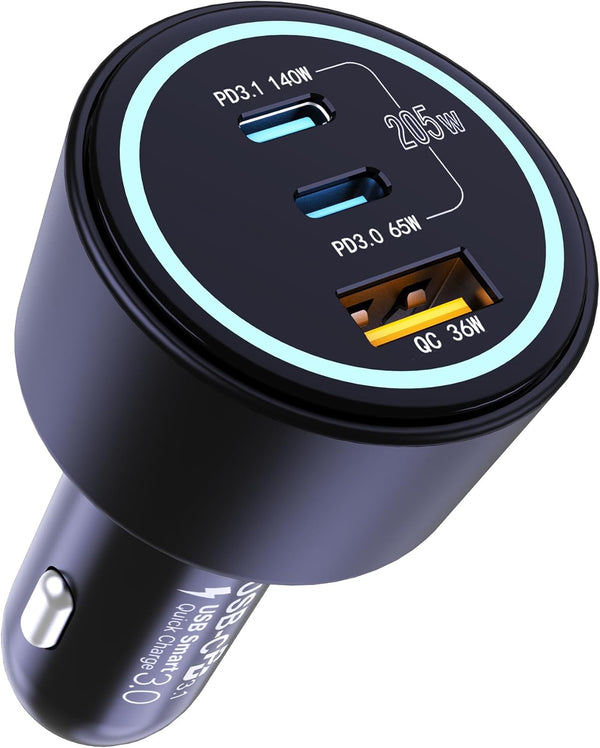
Where appropriate, a compatible multi-port charger can allow several devices to share one organized power location.
Use cable organizers to keep excess length controlled.
Label similar-looking cables if several family members use different connectors.
The goal is not to hide technology completely.
It's to make it predictable.
Step 4: Give Portable Power a Home
Power banks are often forgotten because they're stored inside bags.
Create a simple routine.
When used:
Bag → Charging Station → Recharge → Bag
Now the power bank is ready for:
Work.
School.
Road trips.
Sports.
Flights.
Long family days away from home.
Step 5: Create an Evening Habit
At a consistent point each evening, return essential electronics to the station.
This doesn't need to become a complicated family rule.
It should simply become part of the home rhythm.
Keys go here.
Shoes go there.
Phones charge here.
Why This Tiny System Matters
The real benefit isn't the charging station itself.
It's what disappears:
Searching.
Borrowing.
Cable clutter.
Dead devices.
Morning frustration.
Small problems consume mental energy because they happen repeatedly.
Solve the repeated problem once, and the benefit repeats too.
What to Consider Before Choosing Charging Equipment
Always check:
Device compatibility.
Connector type.
Required output.
Number of devices.
Cable requirements.
Available outlet capacity.
Manufacturer instructions.
Avoid choosing charging equipment solely because it has the highest advertised number.
Choose what properly supports the devices you actually use.
Final Thoughts
A smarter household doesn't always need sophisticated automation.
Sometimes it needs one shelf.
One charger.
A few organized cables.
And a family that knows where everything belongs.
That's everyday technology working the way it should.
Smart Easyon Recommendations
Multi-Port Fast Chargers
Wireless Charging Solutions
Power Banks
Charging Accessories